
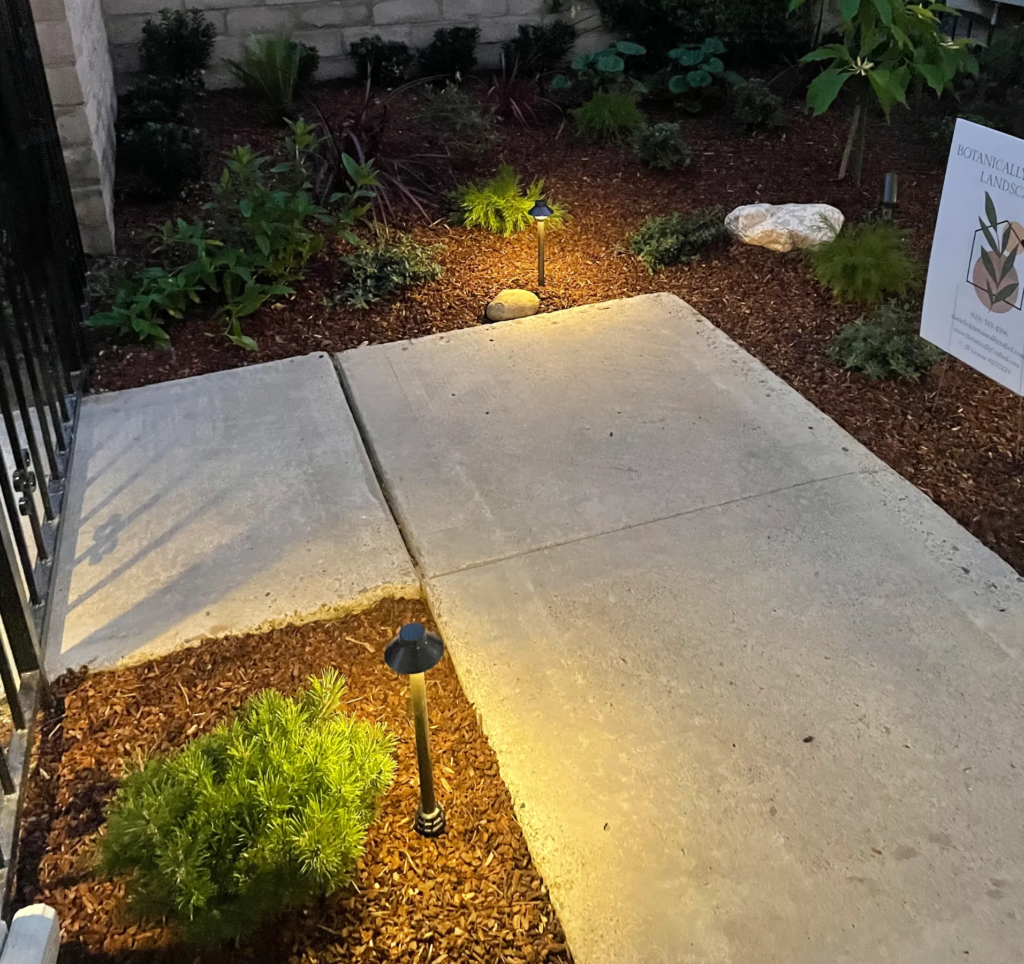
This La Jolla project came together in three weeks. A custom shade sail, precast concrete stepping stones, and outdoor landscape lighting installed throughout — each one chosen with a specific purpose. The lighting is what we want to focus on here, because it is the detail that changed how this yard gets used most.
By Danielle Moher
Botanically Crafted Landscapes
San Diego
July 21, 2026
Most homeowners think about outdoor lighting at the end of a project. The patio is done, the plants are in, the pergola is built — and then someone asks about adding a few lights. By that point, running conduit cleanly is harder, fixture placement is limited by what’s already been built, and the result tends to look like an afterthought rather than part of the design.
Good outdoor lighting works best when it is planned from the start. That means routing conduit during the hardscape phase, placing fixtures before planting goes in, and sizing the transformer for the full system rather than whatever fits after the fact. For the La Jolla project, lighting was part of the original design plan — not something added at the end.
There are three things well-designed landscape lighting accomplishes, and they are all worth understanding before you start planning your own yard.
It extends usability. San Diego evenings are some of the best in the country. A yard without lighting stops being usable the moment the sun goes down. A yard with good lighting becomes a different kind of space after dark — quieter, warmer, and often more enjoyable than the same space in the middle of the afternoon.
It highlights the design. You invested in planting, hardscape, and structure. Outdoor lighting is what makes those elements visible after sunset. Uplighting at the base of a specimen tree, path lighting along a stepping stone walkway, accent fixtures on a retaining wall — each one reveals something the daytime visitor might overlook.
It adds safety. Defined pathways, lit steps, and visible transitions between surfaces make a yard safe to navigate after dark. This matters especially in yards with level changes, dry creek beds, or stepping stone paths where the edge of a surface is not always obvious underfoot.
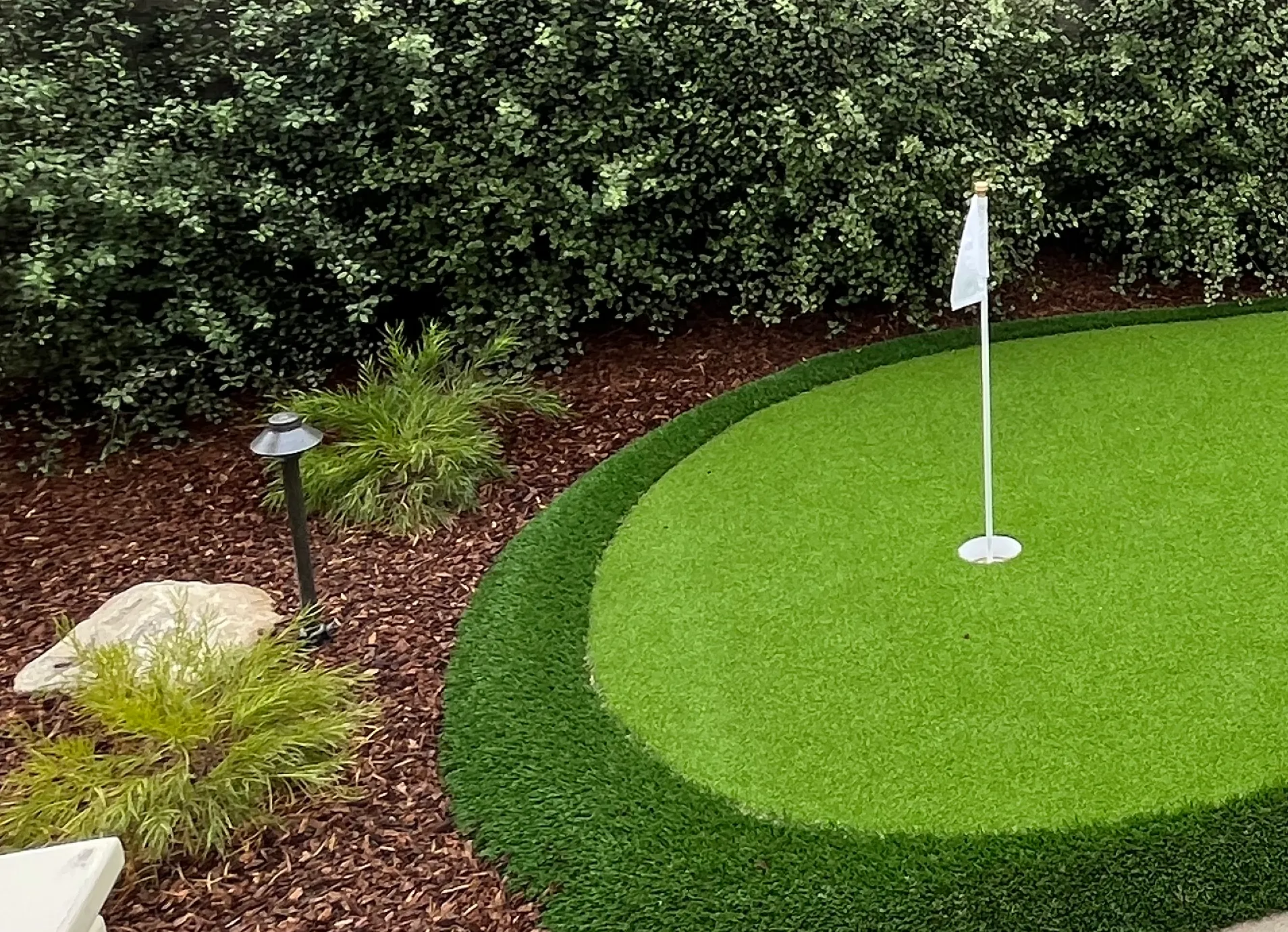
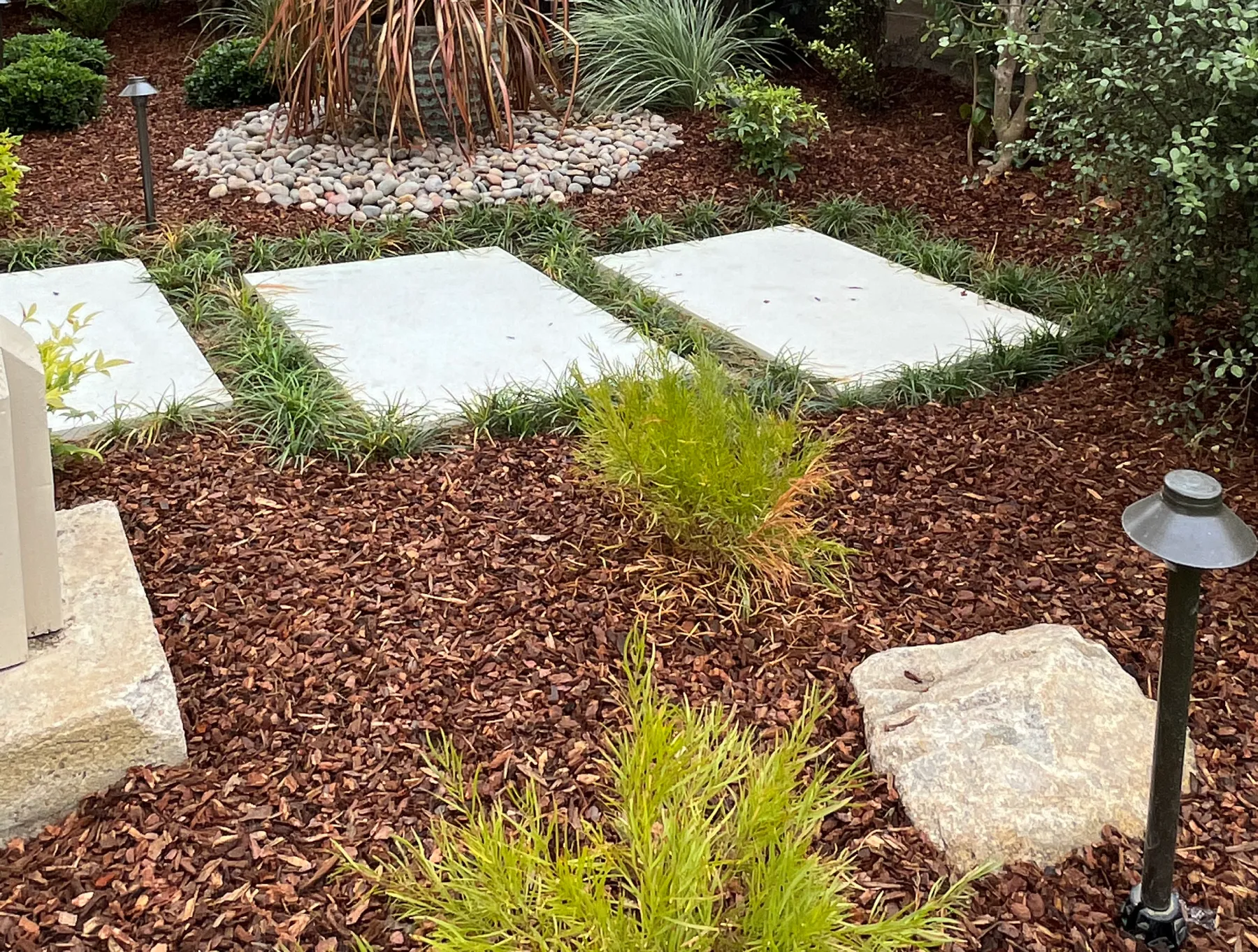
All of the landscape lighting we install uses low-voltage systems. This is worth understanding because it affects both the look and the long-term performance of the system.
Low-voltage lighting runs on 12 volts rather than the standard 120-volt line voltage used inside the home. The practical benefits are significant. The fixtures use less energy, which keeps operating costs low over time. The system is safe to run through planted areas without the risk associated with higher-voltage wiring. And it is modular — meaning fixtures can be added, moved, or adjusted without rewiring the entire system.
For San Diego specifically, low-voltage systems are also well-suited to coastal conditions. Fixtures rated for outdoor and coastal exposure hold up to the salt air, UV exposure, and occasional marine layer that affect properties close to the water.
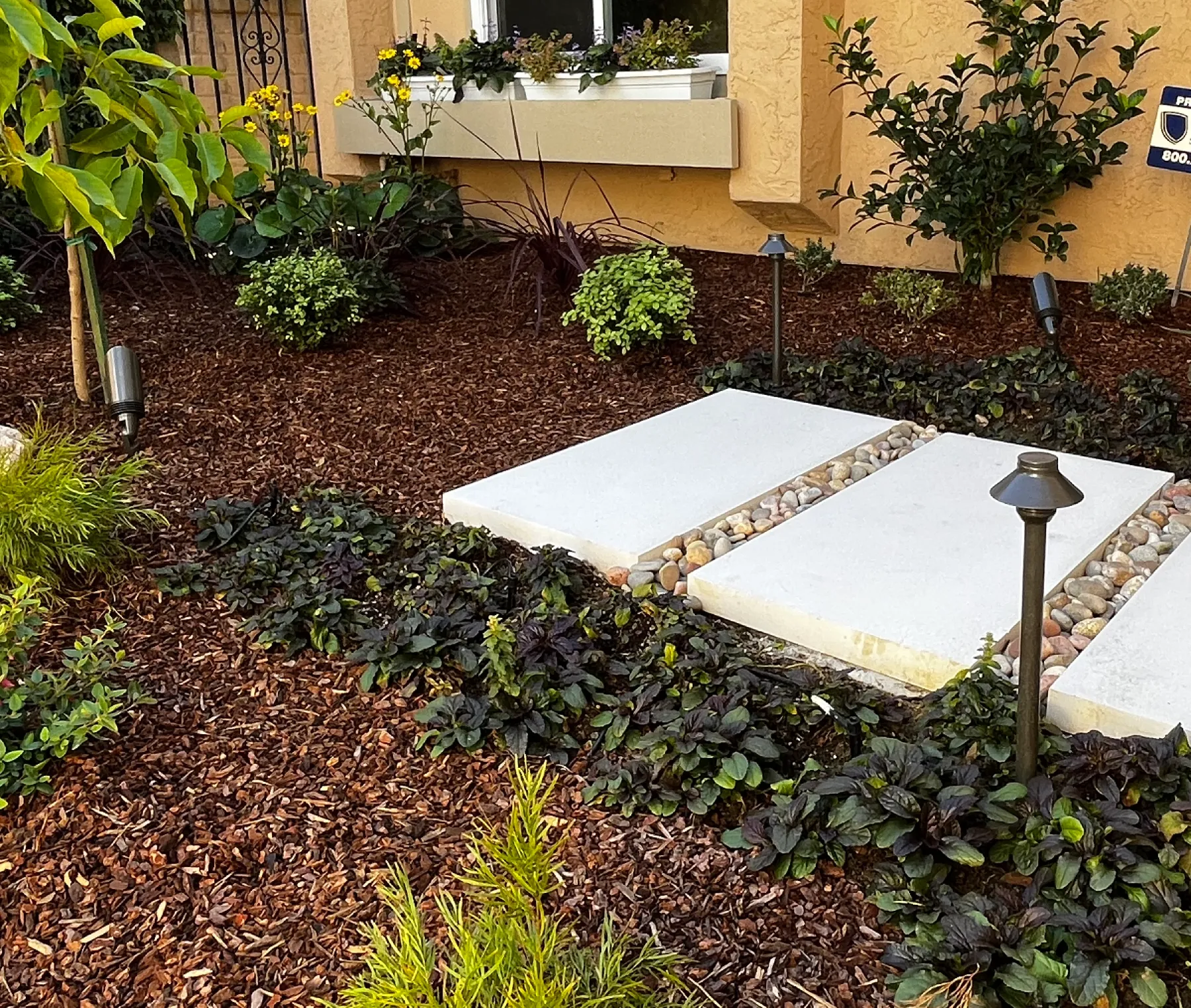
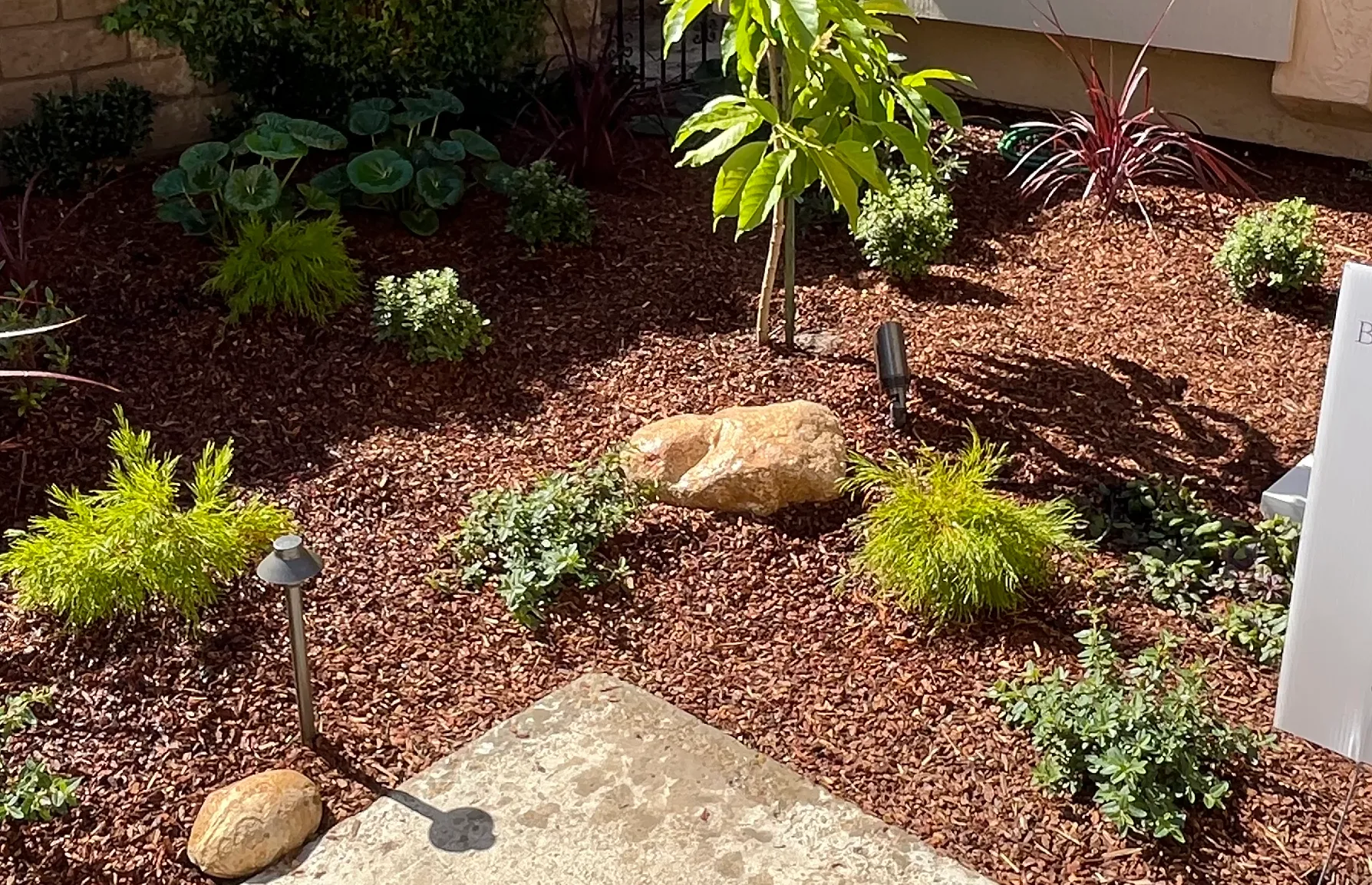
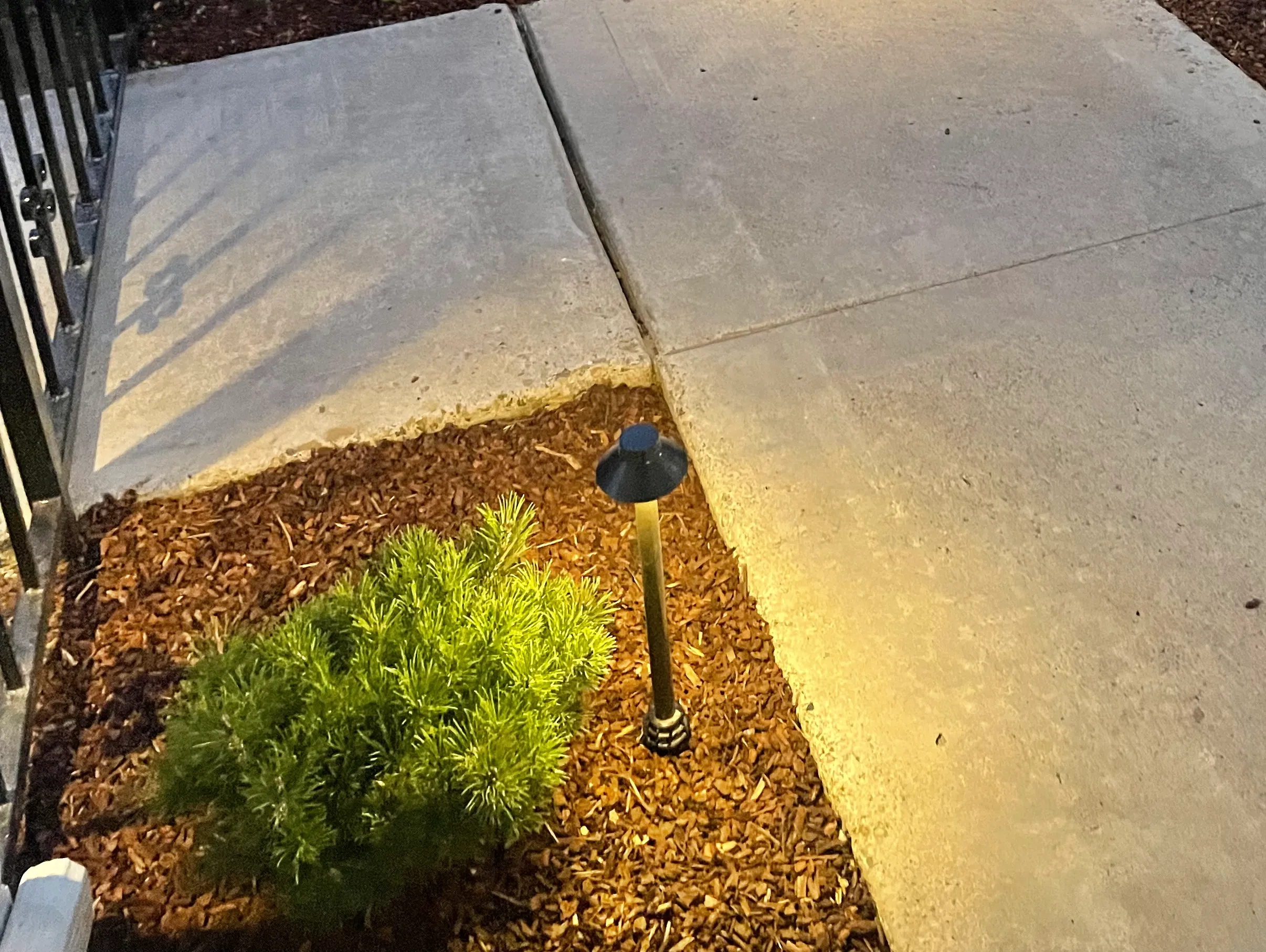
Path lighting along the stepping stones. The precast concrete stepping stones run through the front yard and connect different areas of the space. We placed low-profile path fixtures at intervals along the walkway — enough to define the path clearly after dark without flooding the surrounding planting beds with light. The goal was navigability, not brightness.
Accent lighting on the architectural planting. The La Jolla project included carefully selected plant material chosen as much for its visual structure as for its practical function. Uplighting placed at the base of key plants reveals that structure after dark — the silhouette of a sculptural shrub, the texture of a layered planting bed — details that disappear in the dark without intentional lighting.
General usability lighting for the outdoor living area. The shade sail structure creates a defined outdoor living area that the homeowner wanted to use in the evening. We installed fixtures to provide ambient light in that zone — not task lighting, not spotlights, just enough light to make the space feel comfortable and inviting after sunset.

If you are considering outdoor lighting for your own space, a few things are worth knowing before you start.
Plan it early. If you are doing any hardscape or construction work, that is the right time to route conduit and plan fixture locations. Adding lighting to an existing yard without disturbing hardscape is more complex and often more expensive.
Think about zones. A good lighting plan divides the yard into zones — pathways, planting areas, structures, and outdoor living spaces — and addresses each one with the right type and level of light. A single transformer with a single zone gives you on or off. A zoned system gives you control over the mood and function of different areas independently.
Size the transformer correctly. The transformer is what powers the entire system. Undersizing it limits how many fixtures you can add over time. We size transformers for the current plan with room to expand — so the system can grow as the yard evolves.
We handle all permits and approvals as part of every project, including electrical permits where required.
If you are thinking about outdoor lighting for your own yard, we would love to walk your space with you and talk through what is possible.
See the full La Jolla project: La Jolla Landscape Design & Build →
Every project starts with a conversation at your property. We talk through your vision, your goals, and what your space can become.
If you are thinking about a backyard remodel of your own, we would love to walk your space with you and talk through what is possible.
We use cookies to improve your experience on our site. By using our site, you consent to cookies.
Websites store cookies to enhance functionality and personalise your experience. You can manage your preferences, but blocking some cookies may impact site performance and services.
Essential cookies enable basic functions and are necessary for the proper function of the website.
Google reCAPTCHA helps protect websites from spam and abuse by verifying user interactions through challenges.
Statistics cookies collect information anonymously. This information helps us understand how visitors use our website.
Google Analytics is a powerful tool that tracks and analyzes website traffic for informed marketing decisions.
Service URL: policies.google.com (opens in a new window)
You can find more information in our Cookie Policy and Private: Privacy Policy-3.