Most people approach outdoor design by collecting ideas. Here’s why starting with a narrative changes everything, and how we use it on every project in San Diego.
By Danielle Moher
Botanically Crafted Landscapes
San Diego
April 7, 2026
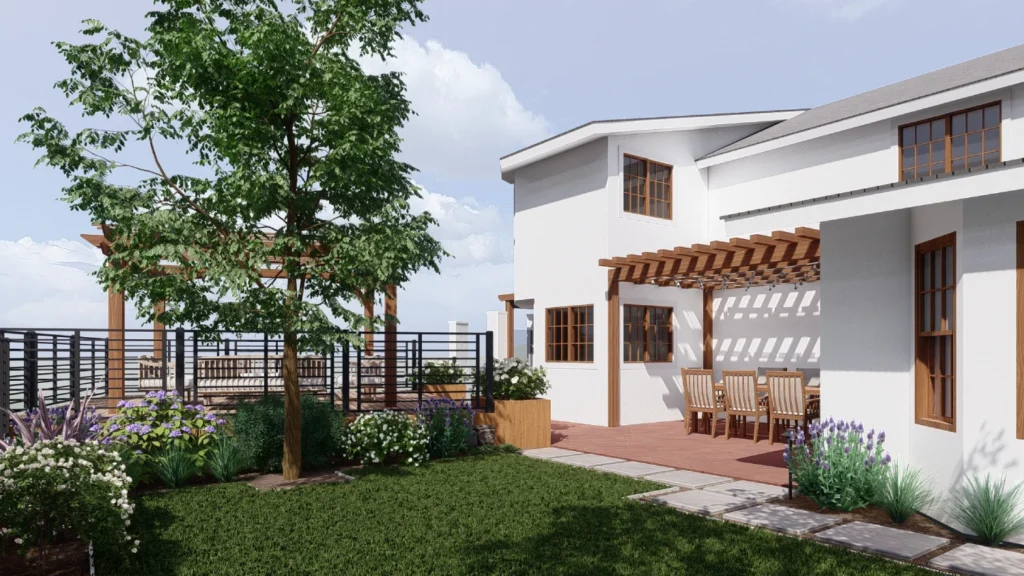
There’s a pattern we see in almost every consultation: a homeowner arrives with a Pinterest folder, a wish list, maybe a rough sketch drawn on graph paper at the kitchen table. They want a pergola. A plunge pool. String lights. A place for the kids. A vegetable bed. It’s all reasonable, but there’s no thread connecting it. And without a thread, you end up with a yard that has everything and feels like nothing.
The backyards that truly get used, the ones that feel inevitable and that guests comment on without being able to say exactly why, are not built from a checklist. They’re built from a story. One central idea that every decision bends toward.
"Before we draw a single line, we ask one question: what do you want to feel the moment you walk outside? Everything else follows from that."
Danielle Moher — Botanically Crafted Landscapes
A story in landscape terms is not a theme. It’s not “Tuscan” or “modern desert.” It’s an emotional intention. Think about the difference between a yard you walk through and a yard you actually exhale in. The second one was designed around a feeling first, and the features second. That guiding sentence might be “a place to decompress after work” or “somewhere the kids want to be until the sun goes down.” Once you have it, every plant, every material, and every light fixture becomes a simple yes or no.
Without that sentence, even a generous budget produces a yard that feels assembled rather than designed. The pergola is nice. The pavers are nice. But nothing is talking to anything else, and the space never quite settles into itself.
One sentence that captures how this yard should feel, not what it should have. We spend real time here because it shapes every decision downstream.
Great spaces have a sequence. Where do you enter? What draws you forward? Where do you land? We design the path before we design the plants.
Sound, texture, fragrance, light. San Diego’s climate lets us activate all of them year-round. We use California natives that work with the seasons, not against them.
Materials that age well, irrigation that runs itself, plants suited to local soils. The story should be easy to live inside, not effortful to maintain.
One thing that separates a landscape that reads as designed from one that reads as assembled is continuity through construction. When the team building the project is the same team that designed it, every improvisation on site (and there are always improvs) serves the original intention. A slab that shifts six inches, an unexpected root, a supplier delay: none of these derail the story. They get absorbed by people who understand it.
We do design and build in-house, which means the idea never gets lost in translation between a drawing and a crew. It also means we can be honest about what’s achievable at your budget, because we’re the ones buying the materials and doing the work.
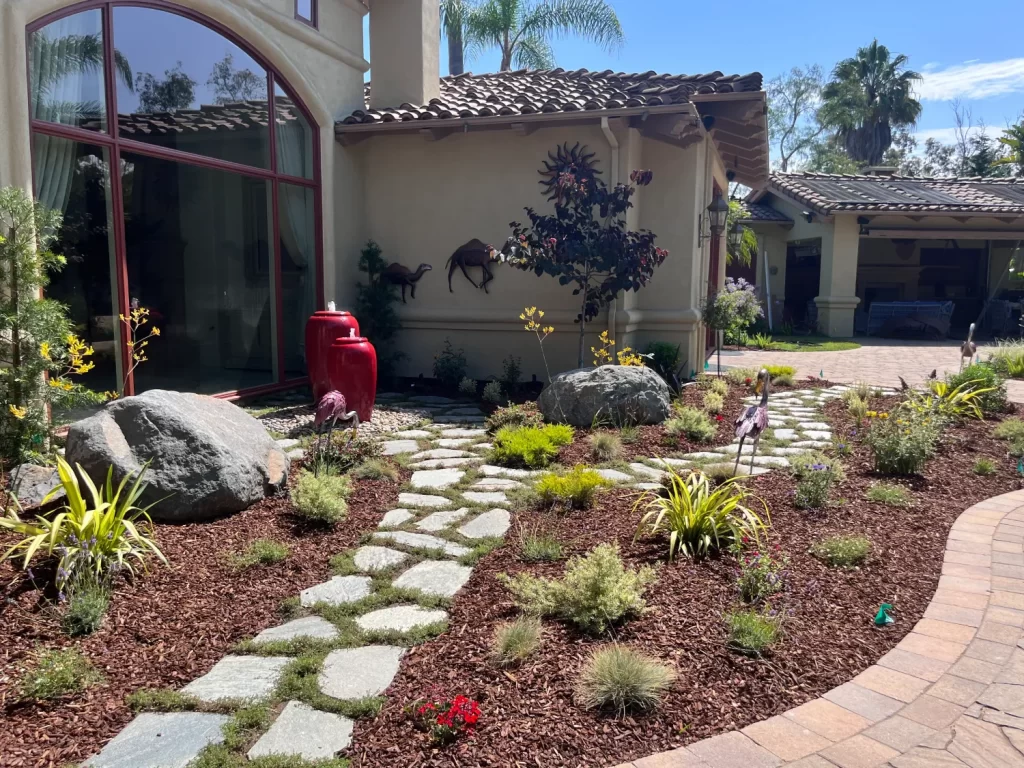
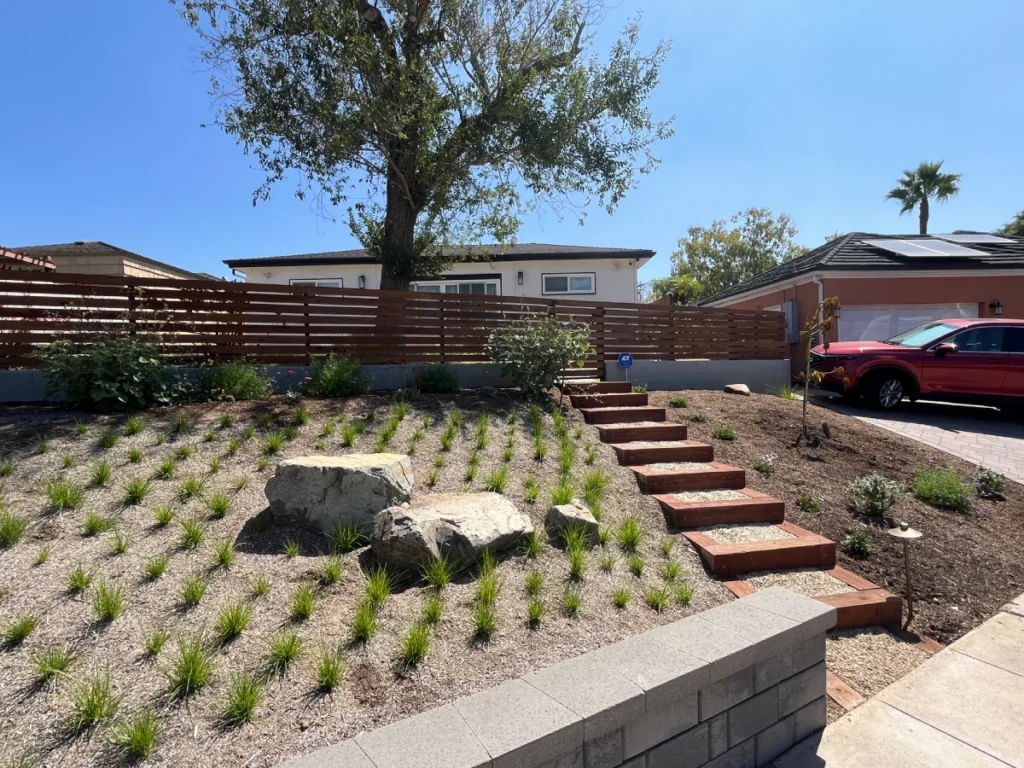
San Diego’s native palette, manzanita, Cleveland sage, Toyon, coast live oak, is not a compromise for drought tolerance. It is genuinely one of the most beautiful plant palettes in the world. Once established (typically after the first season), these plants take care of themselves. They have been doing it for thousands of years.
A well-designed backyard is not one that requires heroic upkeep. It’s one where the plants are in the right place, the irrigation is dialed in, and the hardscape directs water away rather than pooling it. The goal is a yard that looks alive and complex but asks very little of you on a weekend morning. That’s not an accident. It’s the result of decisions made early in the design phase.
We close every project with a full walkthrough: what each zone needs, when it needs it, and what to watch for in year two when things start to fill in. Not because it’s complicated, but because the yard deserves to be understood by the people living in it.
Every project we take on in San Diego starts with a conversation — about how you live, what you want to feel when you walk outside, and what’s realistically achievable with your space and budget. No pressure, no hard sell.
If any of the signs above feel familiar, we’d love to walk your property and talk through what’s possible.
We use cookies to improve your experience on our site. By using our site, you consent to cookies.
Websites store cookies to enhance functionality and personalise your experience. You can manage your preferences, but blocking some cookies may impact site performance and services.
Essential cookies enable basic functions and are necessary for the proper function of the website.
Google reCAPTCHA helps protect websites from spam and abuse by verifying user interactions through challenges.
Statistics cookies collect information anonymously. This information helps us understand how visitors use our website.
Google Analytics is a powerful tool that tracks and analyzes website traffic for informed marketing decisions.
Service URL: policies.google.com (opens in a new window)
You can find more information in our Cookie Policy and Private: Privacy Policy-3.